

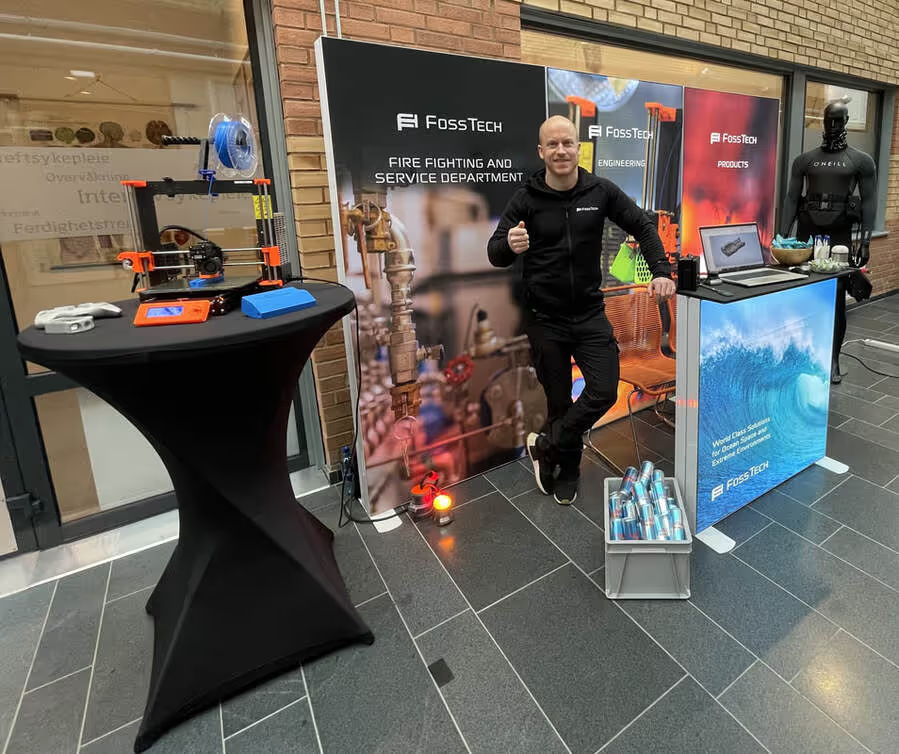
Career day at USN (University of South-Eastern Norway)
Fosstech participated in the career day for engineering students at the University of South-Eastern Norway on Thursday, February 15th!
Read more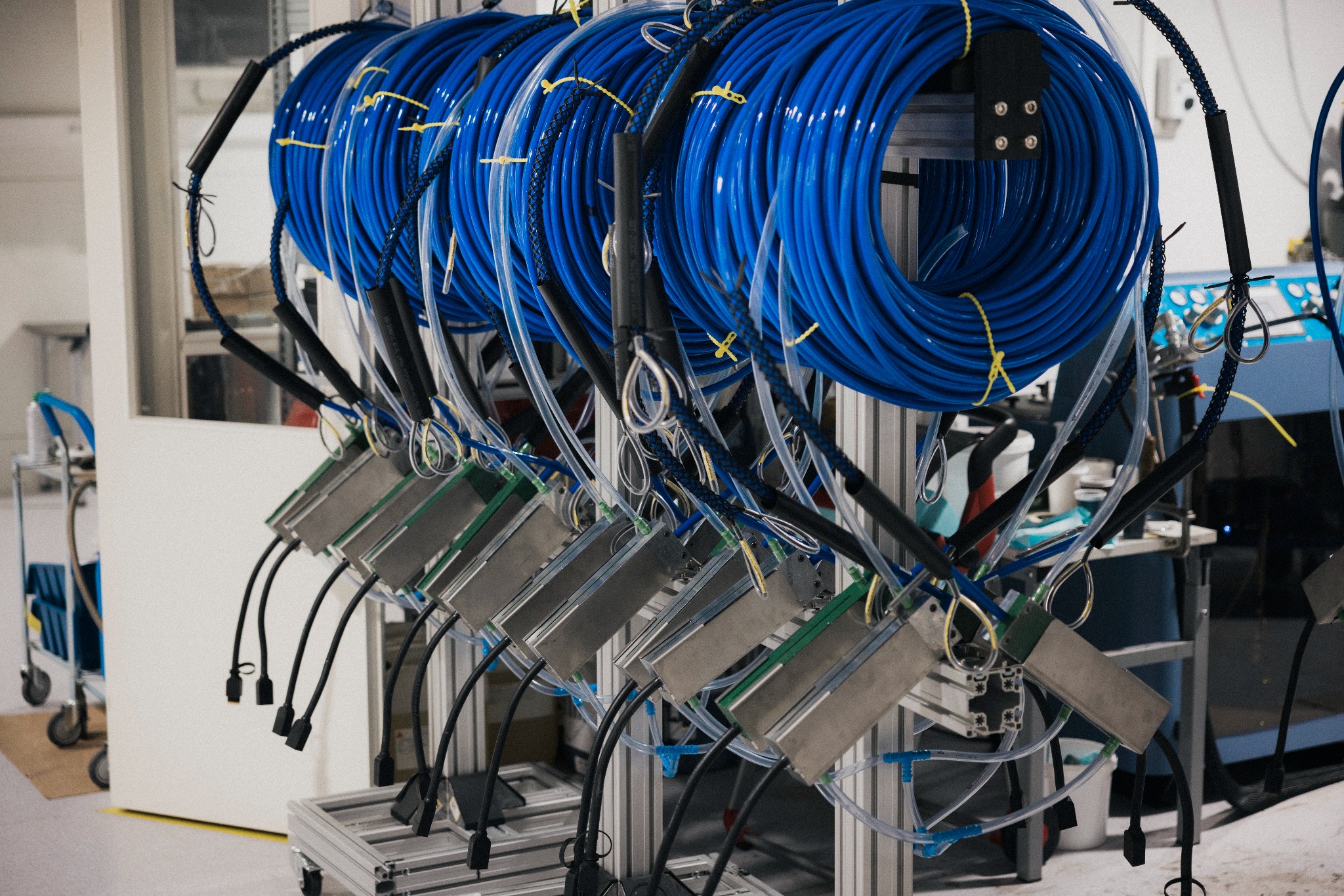
Encapsulation is used in subsea systems and demanding environments to protect electronics, sensors, connectors, and cable terminations from water ingress, corrosion, pressure exposure, and long-term environmental stress.
In theory, the solution is sealed. In operation, the reality is often more demanding.
Electronics and cable assemblies are expected to operate reliably under continuous pressure and environmental exposure. Under these conditions, small weaknesses in design, assembly, or process control can gradually develop into reliability issues.
At Fosstech, many encapsulation projects begin after customers have experienced failures in existing solutions, often related to water ingress, pressure exposure, or instability that develops over time in the field.
Typical causes include:
● Water ingress at cable transitions or connectors
● Trapped air within the encapsulation
● Pressure-related stress inside the assembly
● Weak interfaces between different materials
● Materials not suited to demanding operating conditions
● General design that does not sufficiently account for the encapsulation process, storage, or transportation of the product
In some cases, products perform correctly during initial testing and commissioning. However, problems emerge later, often following prolonged exposure and mechanical stresses during operation.
Water Ingress at Interfaces and Cable Transitions
One of the most common causes of failure in encapsulated assemblies begins at interfaces.
Cable exits, connectors, and transitions between different materials are often the weakest points in an encapsulated assembly. These areas are frequently exposed over long periods to varying environmental conditions, including pressure fluctuations, vibration, thermal movement, and direct contact with seawater.
If sealing at these interfaces is insufficient, water can penetrate the assembly during operation.
This can lead to:
● Corrosion inside the product
● Electrical instability or signal loss
● Sensor failure
● Reduced insulation performance
● Operational failure over time
At Fosstech, interface design is considered early in the development process. Environmental exposure, material selection, cable routing, strain relief, sealing geometry, and material compatibility are evaluated together rather than as separate production steps.
Trapped Air and Pressure Exposure
Small air pockets inside an encapsulated assembly may appear insignificant during production, but they can become a major problem, particularly in demanding environments.
As pressure increases, trapped air can compress and create stress or movement inside the assembly over time. Weak points that appear stable during production or testing can gradually develop into reliability issues during operation. Larger cavities, for example within an encapsulated sensor housing, can lead to immediate collapse.
This can result in:
● Cracking or separation within the encapsulation
● Reduced sealing performance
● Movement or stress within the assembly
● Reduced long-term reliability
● Immediate collapse in severe cases
For this reason, process control is a critical part of reliable encapsulation.
At Fosstech, vacuum-assisted molding is used where necessary to reduce trapped air within the assembly. Molding processes and production methods follow procedures established during the design phase, with verification after each process step.
Material Selection and Long-Term Reliability
Reliable encapsulation involves more than selecting a molding material with the correct datasheet values.
Different applications place different demands on the encapsulation system depending on operating depth, pressure exposure, thermal behaviour, mechanical loading, chemical exposure, signal transmission requirements, and expected service life.
Material selection must therefore, in addition to designing for environmental exposure, be considered together with geometry, assembly methods, curing behaviour, and the surrounding mechanical design. A material that performs well in one application is not necessarily reliable in another.
At Fosstech, molding and encapsulation are closely integrated with engineering, testing, and production. Engineering and production teams work together to identify risks early, particularly those related to interfaces, sealing, trapped air, and long-term environmental exposure.
Some solutions can be validated relatively quickly. Others require repeated testing and extended development programmes before the product is considered stable enough for long-term operation in demanding environments.
Reliable encapsulation is achieved through controlled processes, suitable material systems, and careful consideration of how the complete assembly behaves over time.
Need Support with Encapsulation or Long-Term Reliability Challenges?
Fosstech develops and manufactures molding and encapsulation solutions for applications where pressure exposure, sealing performance, and long service life are critical requirements — from a sketch on a napkin to full-scale production.
Whether you are developing a new product or experiencing reliability issues with an existing solution, our engineering and production teams work closely together to identify the right approach for the application and operating environment.
Get in touch to discuss your encapsulation project.




.svg)
.svg)