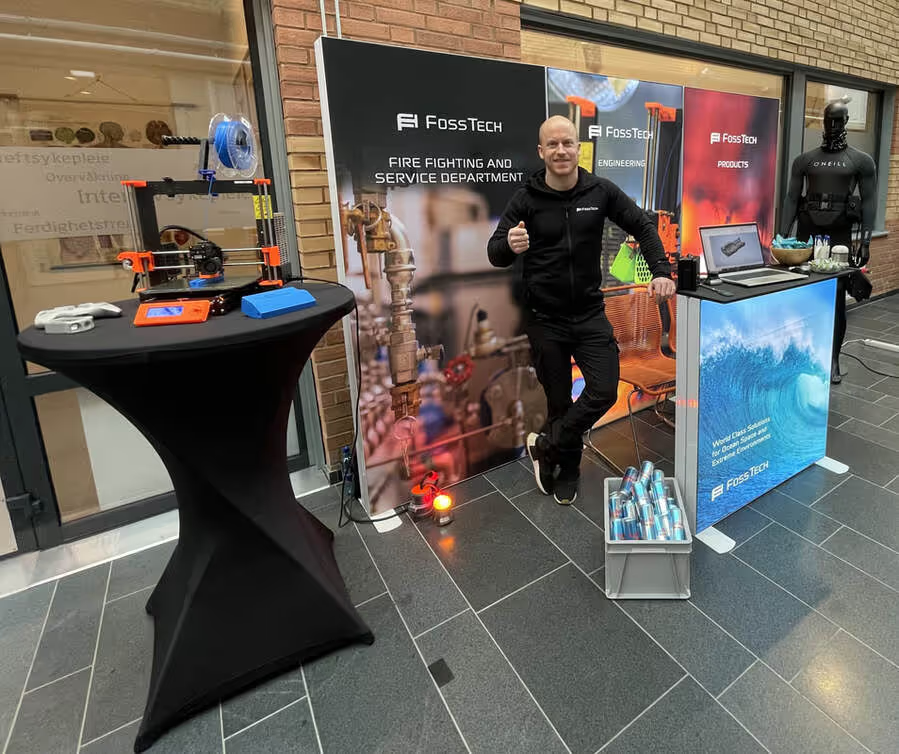
Career day at USN (University of South-Eastern Norway)
Fosstech participated in the career day for engineering students at the University of South-Eastern Norway on Thursday, February 15th!
Read more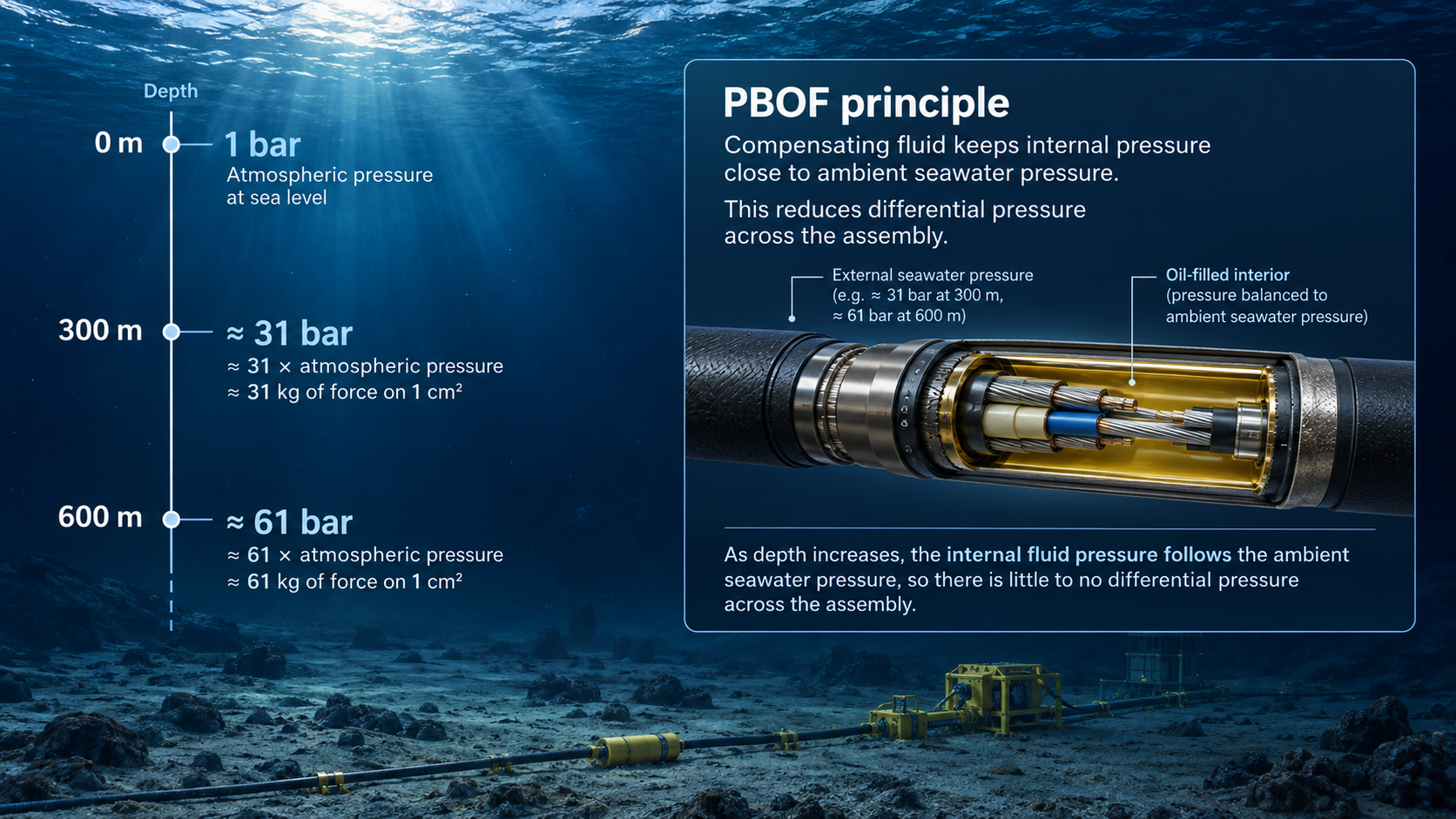
Operating equipment underwater introduces particular engineering challenges. Electrical connections must continue to provide reliable power, control and signal transmission while exposed to hydrostatic pressure, mechanical loading, movement and prolonged immersion. Once equipment is deployed, inspection and repair can also become significantly more difficult.
One established approach for these conditions is the pressure-balanced oil-filled (PBOF) cable assembly, which reduces pressure differences within the cable system rather than relying entirely on pressure-resistant construction.
In a typical PBOF cable assembly, electrical conductors are housed within a flexible, fluid-filled hose or conduit.
The construction allows surrounding seawater pressure to be transmitted to the compensating fluid inside the assembly, keeping internal pressure close to the external environment. This reduces the pressure differential across the cable system and can limit mechanical loading on its components.
Pressure balancing does not eliminate the need for effective sealing or mechanical protection. The hose, connectors and terminations must still maintain the required barriers between seawater and the electrical conductors.
PBOF specifically refers to pressure-balanced oil-filled construction. Oil-filled cable is the broader term and does not necessarily indicate a pressure-balanced design.
Pressure-balanced cable assemblies are relevant where electrical connections must operate under subsea pressure while accommodating the flexibility needed for routing, installation or equipment movement.
Applications can include:
Whether PBOF construction is appropriate depends on the operating conditions, equipment interfaces and the requirements of the complete electrical system.
The reliability of a subsea cable assembly depends on more than the cable itself.
Connectors, terminations, seals and transitions must maintain electrical integrity while accommodating the expected pressure, bending, vibration and mechanical loads.
Material compatibility is particularly important. The selected cable, compensating fluid, hose and sealing materials must be suitable for use together and for the intended operating environment.
Filling and venting are also important considerations in PBOF construction. The compensating fluid must occupy the intended internal volume, while trapped air or gas needs to be controlled because it is significantly more compressible than the liquid. This can affect the assembly's response to changing pressure.
These factors influence how the complete electrical cable assembly is designed, manufactured and maintained.
A suitable design must also be manufactured consistently.
Cable preparation, routing, terminations, strain relief, connector integration and, where applicable, controlled filling and sealing all contribute to the completed assembly.
Defined work instructions, component traceability and documented production processes help ensure that subsequent assemblies reproduce the required configuration and quality.
Testing requirements depend on the application and project specifications. They may include electrical and functional testing, connector and termination inspection, mechanical checks and verification against defined acceptance criteria.
For subsea equipment, identifying assembly defects before deployment is particularly important because accessing or replacing a cable is considerably more difficult once the equipment is in service.
Fosstech manufactures electrical oil-filled and pressure-balanced cables for subsea and high-pressure applications as part of its wider cable and cabinet production.
Its production capabilities range from simple wire sets to advanced cable harnesses and specialist electrical assemblies for demanding industrial, maritime and defence environments.
Fosstech combines engineering, controlled manufacturing, component traceability and testing against defined requirements, supporting both customised solutions and repeatable production.
This wider subsea experience includes the development and production of sensor and cable systems for 4Subsea, including encapsulated strain sensors and complete cable and connector solutions used for long-term monitoring of subsea equipment.
Another example is a custom electrical test cable for a TechnipFMC subsea chemical pump. The project combined electrical cable assembly with specially designed mechanical components and installation on the customer's equipment, demonstrating Fosstech's ability to adapt solutions to specific technical requirements.
Whether you require production of an existing oil-filled cable design, a pressure-balanced electrical assembly or a customised subsea cable solution, contact Fosstech to discuss your engineering, manufacturing and testing requirements.